History of English Literature


History of English Literature


I. Introduction


English Literature, literature produced in England, from the introduction of Old English by the Anglo-Saxons in the 5th century to the present. The works of those Irish and Scottish authors who are closely identified with English life and letters are also considered part of English literature


This period extends from about 450 to 1066, the year of the Norman-French conquest of England. The Germanic tribes from Europe who overran England in the 5th century, after the Roman withdrawal, brought with them the Old English, or Anglo-Saxon, language, which is the basis of Modern English. They brought also a specific poetic tradition, the formal character of which remained surprisingly constant until the termination of their rule by the Norman-French invaders six centuries later.


A. Poetry


 Much of Old English poetry was probably intended to be chanted, with harp accompaniment, by the Anglo-Saxon scop, or bard. Often bold and strong, but also mournful and elegiac in spirit, this poetry emphasizes the sorrow and ultimate futility of life and the helplessness of humans before the power of fate. Almost all this poetry is composed without rhyme, in a characteristic line, or verse, of four stressed syllables alternating with an indeterminate number of unstressed ones. This line strikes strangely on ears habituated to the usual modern pattern, in which the rhythmical unit, or foot, theoretically consists of a constant number (either one or two) of unaccented syllables that always precede or follow any stressed syllable. Another unfamiliar but equally striking feature in the formal character of Old English poetry is structural alliteration, or the use of syllables beginning with similar sounds in two or three of the stresses in each line.

All these qualities of form and spirit are exemplified in the epic poem Beowulf written in the 8th century. Beginning and ending with the funeral of a great king, and composed against a background of impending disaster, it describes the exploits of a Scandinavian cultural hero, Beowulf, in destroying the monster Grendel, Grendel's mother, and a fire-breathing dragon. In these sequences Beowulf is shown not only as a glorious hero but as a savior of the people. The Old Germanic virtue of mutual loyalty between leader and followers is evoked effectively and touchingly in the aged Beowulf's sacrifice of his life and in the reproaches heaped on the retainers who desert him in this climactic battle. The extraordinary artistry with which fragments of other heroic tales are incorporated to illumine the main action, and with which the whole plot is reduced to symmetry, has only recently been fully recognized.

Another feature of Beowulf is the weakening of the sense of the ultimate power of arbitrary fate. The injection of the Christian idea of dependence on a just God is evident. That feature is typical of other Old English literature, for almost all of what survives was preserved by monastic copyists. Most of it was actually composed by religious writers after the early conversion of the people from their faith in the older Germanic divinities.

Sacred legend and story were reduced to verse in poems resembling Beowulf in form. At first such verse was rendered in the somewhat simple, stark style of the poems of Caedmon, a humble man of the late 7th century who was described by the historian and theologian Saint Bede the Venerable as having received the gift of song from God. Later the same type of subject matter was treated in the more ornate language of the Anglo-Saxon poet Cynewulf and his school. The best of their productions is probably the passionate “Dream of the Rood.”

In addition to these religious compositions, Old English poets produced a number of more or less lyrical poems of shorter length, which do not contain specific Christian doctrine and which evoke the Anglo-Saxon sense of the harshness of circumstance and the sadness of the human lot. “The Wanderer” and “The Seafarer” are among the most beautiful of this group of Old English poems.


B. Prose


Prose in Old English is represented by a large number of religious works. The imposing scholarship of monasteries in northern England in the late 7th century reached its peak in the Latin work Historia Ecclesiastica Gentis Anglorum (Ecclesiastical History of the English People, 731) by Bede. The great educational effort of Alfred, king of the West Saxons, in the 9th century produced an Old English translation of this important historical work and of many others, including De Consolatione Philosophiae (The Consolation of Philosophy), by Boethius. This was a significant work of largely Platonic philosophy easily adaptable to Christian thought, and it has had great influence on English literature.

ادامه نوشته

Oriana Fallaci biography /زندگی نامه اوریانا فالانچی


 Italian journalist Oriana Fallaci (1929–2006) became nearly as controversial as the world leaders and dissenting voices she was famous for interrogating during her long and prolific career. Fallaci gained renown in the late 1960s and 1970s for her incisive interviews, during which she fearlessly—and, her critics said, often recklessly—challenged heads of state and revolutionary leaders on their ideologies and tactics. In her later years she became an outspoken opponent of Islam, believing that it posed a threat to peace and stability in Europe.

Born on June 29, 1929, in Florence, Italy, the future journalist was one of three daughters of Edoardo, a cabinetmaker, and Tosca (Cantini) Fallaci. Political activism ran deep on both sides: her mother's father was part of an anarchist movement that flourished in Italy in the years just after World War I, while her father was involved in the anti-fascist resistance against the dictatorship of Benito Mussolini (1883–1945). Fallaci's own political destiny was shaped by World War II, when as a teenager she became active in the underground movement against the Nazi occupation of Italy. The war years also toughened her; at one point her hometown was under heavy aerial bombardment, and after fleeing to an air raid shelter with her family, the 14-year-old began to cry. Her father, seeing her tears, "gave me a powerful slap—he stared me in the eyes and said, 'A girl does not, must not, cry,'" Fallaci recalled in an interview with Margaret Talbot for the New Yorker . She claimed those tears were the last she ever shed in her life.

Abandoned Medical-School Studies

Fallaci's parents encouraged their daughters to pursue academic success, and in 1945, with the war over, she entered the University of Florence's medical school. She quickly discovered that science was not her true calling, and decided she wanted to follow in her paternal uncle's footsteps and try journalism. Pressuring editors at Il Mattino dell'Italia centrale to give her a job, she began writing for the newspaper in 1946 as a crime beat reporter, but soon progressed to feature stories and interviews. After 1951 her work appeared regularly in a magazine called Epoca , and later in another, Europeo . In 1958 her first book, I Sette peccati di Hollywood (The Seven Sins of Hollywood), was published in Italian; filmmaker Orson Welles (1915–1985) wrote its preface.

During the early part of the 1960s, Fallaci traveled widely for Europeo as a special correspondent, and a collection of her articles appeared in 1964 as The Useless Sex: Voyage Around the Woman . She also wrote her first novel, Penelope at War , in 1962, but soon began to gain attention for her interviews. In 1968 several of these were collected into the volume The Egotists: Sixteen Surprising Interviews , in which American writer Norman Mailer (born 1923), film stars Sean Connery (born 1930) and Ingrid Bergman (1915–1982), and the widow of Ernest Hemingway (1899–1961) were among the subjects profiled.

Fallaci's writings and lengthy preambles to her interviews were always tinged with her own left-of-center social and political commentary, but in the latter half of the 1960s she was pulled further into world events and crises by her reporting. She became a war correspondent in Vietnam, covering the Southeast Asian conflict after 1967, and the following year went to Mexico City to report on student unrest there. In the notorious Tlatelolco Massacre, she was

shot three times when government forces fired on demonstrators, an experience she wrote about in her book Nothing, and So Be It . Originally published in Italian in 1969, it appeared three years later in English translation. Her dispatches from Vietnam made up the bulk of it, but the account of the Mexico City incident was perhaps more harrowing. Before she was shot, she and the other demonstrators were corralled by authorities. "In war, you've really got a chance sometimes, but here we had none," she wrote, according to Talbot. "The wall they'd put us up against was a place of execution; if you moved the police would execute you, if you didn't move the soldiers would kill you, and for many nights afterward I was to have this nightmare, the nightmare of a scorpion surrounded by fire, unable even to try to jump through the fire because if it did so it would be pierced through."


ادامه نوشته

Émile Zola biography /زندگی نامه امیل زولا

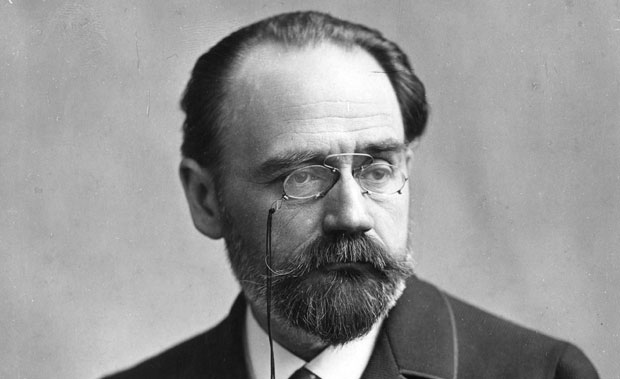
Émile Zola Photo


Émile Zola was born in Paris, France on 2nd April 1840, the son of François Zola, an engineer and his wife Emilie Aubert. He grew up in Aix-en-Provence, attending the (now named) Collège Mignet, then the Lycée Saint Louis in Paris. Under the harsh straits of poverty after his father died Zola worked various clerical jobs. He then moved on to writing literary columns for Cartier de Villemessant’s newspapers. A sign of things to come he was harsh and outspoken in his criticism of Napoleon. He was also harshly anti-Catholic .

One of Zola’s first works published was his autobiographical La Confession de Claude (1865), which attracted many critics and brought negative attention to him including the police. Guilt and shame haunt Thérèse Raquin (1867), another of Zola’s works to inspire many film and television adaptations. Madeleine Férat was published a year later. Zola further explores the scientific model in Le Roman Experimental (The Experimental Novel) (1880). He next wrote his Les Trois Villes series consisting of Lourdes (1894), Rome (1896), and Paris (1898).

Perhaps the most sensational and certainly politically influential work of Zola’s is “J’accuse” (I Accuse!) (1898), his open letter to then French president Félix Faure. Accusing the French government of anti-semitism it was published on the front page of the Paris newspaper `L’Aurore’ (The Dawn) on 13 January 1898 in response to the Dreyfus affair, a scandal that had divided the country in two as the rest of the world watched on uneasily. Captain Alfred Dreyfus was a Jewish military officer in the French army, hastily tried and convicted of treason in 1894. Realizing their error in haste and bureaucratic bungling, the government was not willing to back down and release him from imprisonment on Devil’s Island till many years later. Zola’s article of exposure and ensuing furore led to France’s enactment of the law in 1905 that separates church and state.

Zola was convicted of libel and after his internationally covered trial sentenced to a year long jail term but fled to England. He returned to France when the charge against him was dismissed. Dreyfus was exhonerated and regained full honors with the military. Back in France Zola continued writing, including his Les Quatre Évangiles (Four Gospels); Fécondité (Fruitfulness) (1900), Travail (Labor) (1901), Vérité (Truth) (1903), and Justice (unfinished). Émile Zola died on 29 September 1902 at his home in Paris under what some claim to be suspicious circumstances of carbon monoxide poisoning by stopping up his chimney. He was first interred at the Cimetière de Montmartre in Paris, then later moved to The Panthéon in the Latin Quarter of Paris, France.

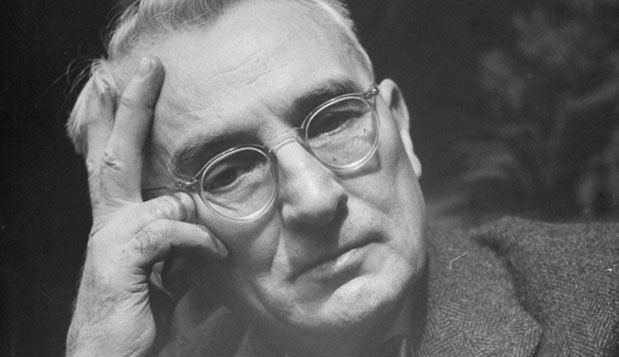
Dale Carnegie biography /زندگی نامه دیل کارنگی

Dale Carnegie


Dale Breckenridge Carnegie, born on 24th November, 1888- 1st November, 1955 was a highly acclaimed American writer, professor and the also the founder of courses such as salesmanship, public speaking, self-improvement and interactive skills. He was born in an impoverished family in Maryville, Missouri. Carnegie harboured a strong love and passion for public speaking from a very early age and was very proactive in debate in high school. Carnegie went to the Warrensburg State Teachers College and later onwards became a salesman for Armour and Company in Nebraska. He also moved to New York in the pursuit of a career in acting and gave classes in public speaking at the Young Men’s Christian Association. Consequently, he began to form classes of his own and also started to work on writing pamphlets, which would eventually be published as books. Carnegie was of the opinion that the quickest and most effective way to build up self-confidence and self-esteem is through public speaking and interaction.

During the early 1930’s, he was renowned and very famous for his books and a radio program. When How to Win Friends and Influence People was published in 1930, it became an instant success and subsequently became one of the biggest bestsellers of all time. It sold more than 10 million copies in many different languages. It also increased the demand for further literary work from him and also to give lectures. Therefore, he began work as a newspaper columnist and formed the Dave Carnegie Institute for Effective Speaking and Human Relations, with several branches globally. Fortunately for Carnegie, he managed to live to see the day, when his name was associated with self-help to success that he so actively advocated and promoted.

Carnegie loved teaching others to climb the pillars of success. His valuable and tested advice was used in many domains and has been the inspiration of many famous people’s success. His book, How To Win Friends and Influence People remains one of the most commercially famous books, primarily because of the colorful illustrations and simple well-constructed rules. The most famous and cited maxims in the book are “Believe that you will succeed, and you will,” and “Learn to love, respect and enjoy other people.”

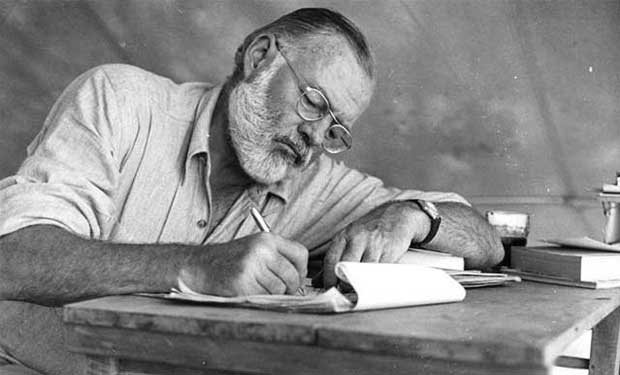
Ernest Hemingway biography/ زندگی نامه ارنست همینگوی

Ernest Hemingway


Ernest Miller Hemingway; one of the most renowned author and journalist of this era, was born on the 21st of July 1899 in Oak Park, Chicago, USA. Born to a simple family, Hemingway worked his way from a reporter for The Kansas City Star then a volunteer for an ambulance unit in World War-I, a journalist in Chicago to a Nobel prize awarded writer who inspired wide range of authors and writers. An institute in himself Hemingway was awarded Nobel Prize for his contribution to literature in 1954.

His writing style became an inspiration for many crime and pulp fiction novels. He wrote in a very distinctive minimalist way. Writing short stories, Hemingway knew how to get the most from the least. With his tightly written prose, he was a master of narration and a brilliant writer. He was not in favor of using emotions. He believed it was easy and useless to do so. Instead he formed sculptures to portray the ‘original feeling’.

His first books include ‘Three stories and Ten Poems’ (1923), ‘In Our Time’ (1924) and ‘The Torrents of Spring’ although his first serious novel and without a doubt the reason of his establishing fame was ‘The Sun also Rises’ (1926) which was later recognized as his greatest work piece. Other major works include ‘Death in the Afternoon’, The Green Hills of Africa’ and ‘To Have and Have Not’.

Though a successful writer, Hemingway never disowned his past. He shared his life experiences on various occasions. He remembered his mother dressing him up as a little girl and the sorry incident of his father taking his own life in 1928. He used his life experiences as inspirations for many of his books. When the United States entered the First World War, Ernest Hemingway volunteered to work in an ambulance unit in the Italian army. His first duty was to visit an explosion site where his unit had to salvage the remains of female workers. He described this unpleasant incident in his book ‘Death in the Afternoon’. Another book ‘A farewell to Arms’ was inspired by a love affair he had with a nurse during his stay at the hospital.

After returning home from the war, Hemingway became a reporter for the American and Canadian newspapers. He was then sent to Europe to cover happenings such as the Greece Revolution. In 1921, he moved to Paris where he worked as an article writer for the ‘Toronto Star’.

Hemingway received the Nobel Prize in 1954. Although he always thought this was given to him in pity due to his obituary notices. Hemingway started going into depression with the deaths of some of his close friends. He was also seriously injured in two successive plane crashes. He received third degree burns while at a fishing expedition shortly after his recovery from the plane crash. Hemingway went through a lot of hurt and depression during the 1950s till his death. Later the doctors believed he had a genetic disease in which a person is prone to suicide due to inherent depression. During his last years his behavior is said to resemble his father’s before he had committed suicide. In 1961 Ernest Hemingway committed suicide.

Hemingway’ distinct influence on literature can be witnessed in continuous tributes and recognitions that followed his demise.

Edgar Allan Poe biography /زندگی نامه ادگار الن پو

Edgar Allan Poe


Edgar Allan Poe regarded as the father of modern detective story, was an American poet, author and literary critic. He was born on 19th January 1809 in Boston, Massachusetts. His contribution in the genre of science fiction and horror won him great recognition and appreciation during his lifetime and after his death. He is also considered to be the first well-known American Author who attempted to make his living solely on the basis of his writing career.

Poe was three years old when he lost both his father and mother. Orphaned at such a young age, he was adopted by John and Frances Alan, a wealthy merchant of Richmond, Virginia. In 1815 his foster parents moved to England where Poe attended school in Chelsea. Mr. Allan wanted to raise Poe as a successful business man but since his childhood Poe dreamt of becoming a poet. As early as the age of thirteen, Poe had written enough poetry to compile a book. In 1820, he returned to Richmond and got accepted by The University of Virginia. There he found himself attracted towards Latin and poetry. His attachment with the university however was short lived as he had to leave on account of financial issues. His financial condition also had its effect on Poe’s relationship with his foster father. He later recalled being furious on Allan for not providing enough funds for his university fee. This tension among the two led Poe to leave Allan’s home with an ambition to fulfill his dream of becoming a great poet.

In 1827, when he was just eighteen, Poe published his first book Tamerlane. In 1829 Poe and John reconciled for some time honoring his foster mother’s deathbed wish. John helped Poe to get enrolled in US Military academy at West Point. Before joining the academy he published his second book “Al Araaf”. He was expelled from the academy just after eight months of enrollment.

In 1831 Poe moved in with his aunt Maria Clemm in Baltimore. There he got engaged and later married his cousin Virginia Eliza Clemm. In 1833, Poe started publishing his short stories and poems through Baltimore Saturday Visiter. The year 1835 marked a formal start of his career when he joined Southern Literary Messenger as an editor and contributor. Within a year Poe gained wide recognition through his stories and mocking book reviews. He gained reputation of a critic who fearlessly attacked not just the writing but also openly criticized the author. He also made several contributions to other publications such as ‘Gentleman’s’ magazine, ‘Evening Mirror’ and ‘Graham’s’ magazine.

In 1837 Poe moved to New York and then to Philadelphia in 1838. He continued to make contributions in different journals. In spite of his growing success and fame Poe would always find himself in the middle of financial crises though later he became recognized as the cause of higher wages of writers.

In the year 1845 Poe gave one his most successful publication “The Rave”, a poem that earned him great fame. By now Poe was able to attract large crowds to his lectures and was in position to demand better pay for his work. He also published two books the same year. To bring a change in the magazine industry Poe proposed to start his own journal by the name of “The Stylus”, a dream he was never able to live. Poe died on October 7, 1849.

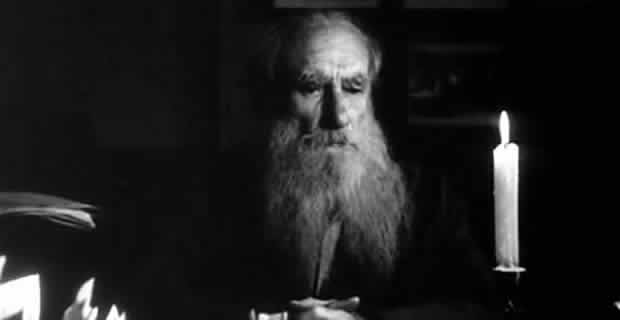
Leo Tolstoy biography


Lev Nikolayevich Tolstoy was a Russian author best known for his novels War and Peace and Anna Karenina which are considered to be the greatest novels of realist fiction. Tolstoy is also regarded as world’s best novelist by many. In addition to writing novels, Tolstoy also authored short stories, essays and plays. Also a moral thinker and a social reformer, Tolstoy held severe moralistic views. In later life, he became a fervent Christian anarchist and anarcho-pacifist. His non-violent resistance approach towards life has been expressed in his works such as The Kingdom of God is Within You, which is known to have a profound effect on important 20th century figures, particularly, Martin Luther King Jr. and Mohandas Gandhi. Born in Yasnaya Polyana on September 9, 1828, Leo Tolstoy belonged to a well known noble Russian family. He was the fourth among five children of Count Nikolai Ilyich Tolstoy and Countess Mariya Tolstaya, both of whom died leaving their children to be raised by relatives. Wanting to enter the faculty of Oriental languages at Kazan University, Tolstoy prepared for the entry examination by studying Arabic, Turkish, Latin, German, English, and French, also geography, history, and religion. In 1844, Tolstoy was accepted into Kazan University. Unable to graduate beyond the second year, Tolstoy returned to Yasnava Polyana and then spent time travelling between Moscow and St. Petersburg. With some working knowledge of several languages, he became a polyglot. The newly found youth attracted Tolstoy towards drinking, visiting brothels and most of all gambling which left him in heavy debt and agony but Tolstoy soon realized he was living a brutish life and once again attempted university exams in the hope that he would obtain a position with the government, but ended but up in Caucusus serving in the army following in the footsteps of his elder brother. It was during this time that Tolstoy began writing. In 1862, Leo Tolstoy married Sophia Andreevna Behrs, mostly called Sonya, who was 16 years younger than him. The couple had thirteen children, of which, five died at an early age. Sonya acted as Tolstoy’s secretary, proof-reader and financial manager while he composed two of his greatest works. Their early married life was filled with contentment. However, Tolstoy’s relationship with his wife deteriorated as his beliefs became increasingly radical to the extent of disowning his inherited and earned wealth. Tolstoy began writing his masterpiece, War and Peace in 1862. The six volumes of the work were published between 1863 and 1869. With 580 characters fetched from history and others created by Tolstoy, this great novel takes on exploring the theory of history and the insignificance of noted figures such as Alexander and Napoleon. Anna Karenina, Tolstoy’s next epic was started in 1873 and published completely in 1878. Among his earliest publications are autobiographical works such as Childhood, Boyhood and Youth (1852-1856). Although they are works of fiction, the novels reveal aspects of Leo’s own life and experiences. Tolstoy was a master of writing about the Russian society, evidence of which is displayed in The Cossacks (1863). His later works such as The Death of Ivan Ilyich (1886) and What Is to Be Done? (1901) focus on Christian themes. In his late years, Tolstoy became increasingly inclined towards ascetic morality and believed sternly in the Sermon on the Mount and non violent resistance. On November 20, 1910, Leo Tolstoy died at the age of 82 due to pneumonia.

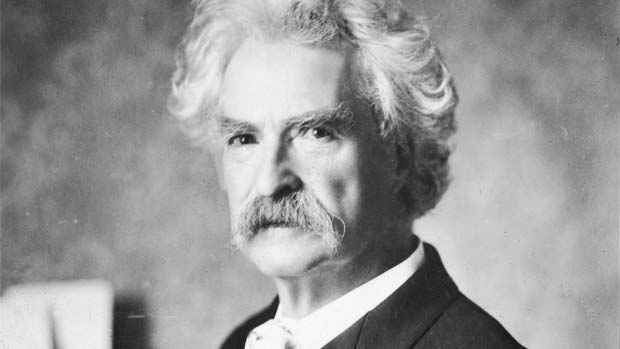
Mark Twain biography/ زندگی نامه مارک تواین

Mark Twain


An iconic figure of the American literature whose works have reached, entertained and inspired a global readership, Mark Twain was the exceptional author of the famous Huckleberry Finn (1885) which is considered to be one of the first great American novels.

Mark Twain was born Samuel Langhorne Clemens on November 30, 1835 in Florida, Missouri. He was the sixth child of John Marshall Clemens, a judge and Jane Lampton who had no idea they had become parents to what would be one of the most famous personalities in America. In 1839, four years after his birth, Samuel’s family moved 35 miles east to their Hill Street home in Hannibal. The bustling port city of Hannibal where steamboats arrived from St. Louis and New Orleans day and night would later be featured fictitiously as the town of St. Petersburg in Tom Sawyer and Huckleberry Finn.

The death of his father in 1847 left the family in a financial crunch forcing Samuel to drop out of school while studying in grade five. He set out to work in order to support himself and the family. Among the many jobs Samuel undertook was becoming a printer’s apprentice and a journeyman printer. Samuel realized his love of writing while working as a printer and editorial assistant at his brother Orion’s newspaper. In 1857, a young Samuel left for St. Louis where he became a river pilot’s apprentice earning a license in 1858. He travelled frequently between St. Louis and New Orleans, with a growing appreciation for the world’s second longest river which he admiringly illustrates through words in his memoir, Life on the Mississippi (1883). It was during his days as a river pilot that Samuel acquired the pseudonym, Mark Twain which is a river term referring to being safe to navigate when the depth of water is 12 feet for the boat to be sounded.


ادامه نوشته

the biography of anton chekhov/ زندگی نامه آنتوان چخوف


Anton Pavlovich Chekhov was born on January 29th in the year 1860, in the small seaport of Taganrog, Ukraine. He is regarded as one of Russia’s most cherished story tellers. He has produced some hilarious one-acts, but his tragic stories have gained him the name of being one of the major dramatists. Today, he is remembered as a playwright and one of the masters of the modern short story. He was the grandson of a serf and the son of a grocer, whose religious fanaticism caused much of his early years to reside under its shadow. While he was doing medicine in the University of Moscow, he began writing short stories. After graduating in 1884, he worked as a freelance writer and journalist related to comics. He used the money gathered from it to support himself and his family, and by 1886, he had gained wide fame as a writer. Chekhov’s works were published in various St. Petersburg papers, including Peterburskaia Gazeta in 1885, and Novoe Vremia in 1886. The Shooting Party published by him was translated into English in 1926.


ادامه نوشته

ترجمه شعر Rememberance از شکسپیر


Rememberance


When, in disgrace with fortune and men's eyes,

I all alone beweep my outcast state,

And trouble deaf heaven with my bootless cries,


And look upon myself, and curse my fate,

Wishing me like to one more rich in hope,

Featured like him, like him with friends possest,


Desiring this man's art, and that man's scope,

With what I most enjoy contented least;

Yet in these thoughts myself almost despising,


Hoply I think on thee, and then my state,

Like to the lark at break of day arising

From sullen earth, sings hymns at heaven's gate;


For thy sweet love remember'd such wealth brings,

That then I scorn to change my state with kings.


                   براي ترجمه به ادامه مطلب مراجعه فرماييد  

ادامه نوشته

زندگی نامه زنده یاد محمد قاضی


محمد قاضی در سال 1292 در شهر مهاباد به دنیا آمد

محمد قاضی آموختن زبان فرانسه را در مهاباد نزد شخصی به‌نام آقای گیو، از کردهای عراق آغاز کرد.

قاضی در سال ۱۳۰۸ با کمک عموی خود میرزا جواد قاضی که از آلمان دیپلم حقوق گرفته‌بود و در وزارت دادگستری آن‌زمان کار می‌کرد، به تهران آمد و در سال ۱۳۱۵ از دارالفنون در رشته ادبی دیپلم گرفت.

محمد قاضی از مترجمان برجسته دوره معاصر ایران است. وی ۵۰ سال ترجمه کرد و نوشت و نتیجه تلاش او ۶۸ اثر اعم از ترجمه ادبی و آثار خود او به زبان فارسی است.

از آثار مهم ترجمه‌شده توسط او می‌توان به دن کیشوت اثر سروانتس، نان و شراب اثر ایناتسیو سیلونه، آزادی یا مرگ، در زیر یوغ نام برد. او بیشتر از زبان فرانسه به فارسی ترجمه می‌کرد.

او در مهرماه ۱۳۲۰ به استخدام وزارت دارایی درآمد. در سال ۱۳۵۴ به سرطان حنجره و از دست دادن تارهای صوتی دچار و بازنشسته شد. او چندی با کانون پرورش کوذکان و نوجوانان در تهران نیز همکاری داشت.

محمد قاضی در سال 1376 و در سن 84 سالگی در بیمارستان دی تهران درگذشت و با اینکه وی سال‌ها در تهران ساکن بود او را در مهاباد به‌خاک سپردند.

در فروردین‌ سال ۱۳۸۶ از تندیسی به بلندی 4 متر از محمد قاضی در کوی دانشگاه مهاباد پرده‌برداری شد.

برخی از آثار ترجمه‌شده محمد قاضی:

  • جزیره پنگوئن‌ها (اثر آناتول فرانس)
  • چهل روز موسی داغ اثر فرانتز ورفل (ترجمه‌شده در ۱۳۷۳ خ)
  • درد ملت (ترجمه به همراه احمد قاضی از رمان کردی «ژانی گه‌ل» نوشته ابراهیم احمد)
  • دن کیشوت اثر میگل د.سروانتس (ترجمه‌شده در ۱۳۳۶ خ)
ادامه نوشته

In the hope


In the hope of union, my very life, I’ll give up
As a bird of Paradise, this worldly trap I will hop.
In the hope of one day, being your worthy servant
Mastery of both worlds I’ll gladly drop.
May the cloud of guidance unload its rain
Before I am back to dust, into the air I rise up.
Beside my tomb bring minstrels and wine
My spirit will then dance to music and scent of the cup.
Show me your beauty, O graceful beloved of mine
To my life and the world, with ovation I put a stop.
Though I am old, tonight, hold me in your arms
In the morn, a youthful one, I’ll rise up.
On my deathbed give me a glimpse of your face
So like Hafiz, I too, will reach the top

مژده وصل تو کو کز سر جان برخیزم
طایر قدسم و از دام جهان برخیزم
به ولای تو که گر بنده خویشم خوانی
از سر خواجگی کون و مکان برخیزم
یا رب از ابر هدایت برسان بارانی
پیشتر زان که چو گردی ز میان برخیزم
بر سر تربت من با می و مطرب بنشین
تا به بویت ز لحد رقص کنان برخیزم
خیز و بالا بنما ای بت شیرین حرکات
کز سر جان و جهان دست فشان برخیزم
گر چه پیرم تو شبی تنگ در آغوشم کش
تا سحرگه ز کنار تو جوان برخیزم
روز مرگم نفسی مهلت دیدار بده
تا چو حافظ ز سر جان و جهان برخیزم


طنز...


شاهکار بیکاران

تنی چند از تحصیل کرده های بیکار در یکی از قهوه خانه های محله ، چایی های تازه دم را دم به دم نوش جان می کردند و با خواندن پیامک های با مزه که هر از گاهی ، آدم های با مزه دم به دم به یکدیگر رد و بدل می کنند ، حسابی برای خودشان دم گرفته بودند . بیکاران هنرمند ما سعی می کردند در این کار هنری ، گوی سبقت را از دیگر رقبای خود بربایند . جناب " الف " که مدرک کارشناسی داشت ، با ولع خاص و عجله ای که انگار عزرائیل دنبالش می کرد متاع اش را با آب و تاب به خریداران عرضه کرد : " آنکس که بداند و بداند که بداند ، باید برود غاز به کنجی بچراند...آنکس که بداند و نداند که بداند ، بهتر برود خویش به گوری بتپاند...آنکس که نداند و بداند که نداند ، با پارتی و پول خر خویش براند...آنکس که نداند و نداند که نداند ، بر پست و ریاست ابدالدهر بماند ..."

جناب " الف " هنرش را که به منصه ی ظهور رساند ، هنرمندان به یکباره هورایی کشیدندو گفتند : " ساغول...ساغول...دمین ایستی...یعنی دمت گرم "

یارو که با تشویق دوستانش مواجه شده بود ، دوباره دور برداشت : " دو نفر از کارمندان یکی از استانداری ها ، تصمیم می گیرند با یکدیگر مثلا فاسی صحبت بکنند .

اولی : پاشو

دومی : نمی پاشم

اولی : نمی پاشم چیه؟! آبپاش که نیستی! باید بگی پاشیده نمی شوم

سخنان جناب " الف " که تمام شد و به اصطلاح کفگیرش به ته دیگ خورد ، این صدای قه قه بیکاران قهوه خانه بود که گوش فلک را کر می ساخت .

این بار دیگر نوبت جناب " ب " بود که مثل دسته گل ظاهر شد و عین قناری چه چه زد : " یکی از نامزدهای شورای شهر...پس از رد صلاحیت اش ، از بس که دمغ و پکر بود ، شلوارش را برعکس می پوشد . مامانش میگه : الهی قربون بچه ام برم ، که هر وقت داری میری انگار داری میای "

حالا گوش دل بسپارید به شاهکار جناب " پ " تحت عنوان " نحوه ی سلام یکی از فرمانداران به استاندار " تا ببینید چه دسته گلی که به آب نداد : " با عرض سلامی به بلندی بیل ، به محکمی کلنگ ، به گردی استامبلی ، به سرعت فرغون ، به تیزی شاقول ، به انعطاف پذیری طناب ، به لبریزی دوغاب ، به سفیدی سیمان سفید ، به صافی ماله ، به قشنگی کمچه و به وسعت بشکه!! "

- به به...به به...دوغروسی کی چوخ بیر گوزل سلام ائیدی...

در این فاصله بود که جناب " ت " به جوش و خروش آمد : " جناب مدیر کل! اینجا آسمان صاف تا قسمتی رنگ دوستی همراه با غبار فراق است ، توده ای سلام به سمت شما در حرکت است ، ضمنا احتمال بارش محبت فراوان است... "

حالا دیگر نوبت من بود که sms خودم را برایشان بخوانم : " انسان چیست؟ شنبه به دنیا می آید. یکشنبه راه می رود . دوشنبه عاشق می شود. سه شنبه شکست می خورد . چهار شنبه ازدواج می کند. پنج شنبه به بستر بیماری می افتد و جمعه می میرد..."


منبع: وب سایت عباس حسین پور

www.chawoosh.ir

Poetry


There is nothing beautiful here
However I may want it. I can't 
Spin a crystal palace of this thin air,
Weave a darkness plush as molefur with my tongue
However I want. Yet I am not alone
In these alleys of vowels, which comfort me
As the single living nun of a convent
Is comforted by the walls of that catacomb
She walks at night, lit by her own moving candle.
I am not afraid of mirrors or the future
--Or even you, lovers, wandering cow-fat
And rutting in the gardens of this earthly verge
Where I too trod, a sunspot, parasol-shaded,
Kin to the trees, the bees, the color green.


by Monica Ferrell


پرواز «قوها» همیشه «زیبا» نیست!...


ImageHandler.ashx

عباس حسین پور - ژورنالیست


تا همین دیروز فکر می کردم که پرواز «قو» ها زیباست! اما امروز باور کردم که پرواز قوها بعضی وقت ها نه تنها زیبا نیست ، بلکه «نازیباست».

فارغ از نظم و ترتیب ظاهری پرواز قوها و تغییر گاه به گاه طلایه داران این «پرواز گروهی » که معمولا همین عوامل هر از گاهی بر سر ما روزنامه نگاران و همچنین اهل سیاست کلاه می گذارند! تا تعابیر نادرستی ارائه دهیم ؛ آنچه که در طول! این مهاجرت گروهی مد نظر قرار نمی گیرد در وهله ی اول «پرواز» و در وهله ی دوم اصل «مهاجرت» است .                                           

چندی پیش صفحات یکی از نشریات را ورق می زدم ، این روزنامه به نقل از یکی از نمایندگان نوشته بود که بیش از چهار صد هزار تحصیلکرده ایرانی (با مدرک کارشناسی و بالاتر) در طول سه دهه ی گذشته پس از اتمام دوره تحصیلی از مرزهای کشور عبور کرده و هرگز به این سرزمین «پر گهر»! برنگشته اند!

البته برخی اصحاب قلم و مطبوعات فارغ از نظر جناب آقای نماینده هم در این مدت پرواز

بی بازگشت داشته اند . در حقیقت از سخنان این نماینده می توان به آسانی دریافت که «قوهای» اندیشمند ایرانی و در واقع «نخبگان» این مملکت دست به مهاجرتی زده اند که متاسفانه «هرگز» اینگونه مهاجرت ها «بازگشتی» در پی نداشته است .

اگر کمی در این مورد تامل کنیم ، به آسانی در می یابیم که چه سرمایه های عظیمی از کشورمان «پر» کشیده اند . آری! بیش از چهارصد هزار مغز متفکر ، بیش از چهار صد هزار نفر نیروی کار جوان و آخر سر اینکه چهار صد هزار ضربدر «یکصد هزار دلار» ناقابل [هر تحصیلکرده به قول یکی از حضرات از بدو ورود به مدرسه تا پایان مدارج دانشگاهی یکصد هزار دلار «هزینه بری» دارد .

در پروازی تاسف بار و احتمالا بدور از چشمان تیز بین و موشکاف آنهایی که دیروز تئوری «زیبایی پرواز قوها» را ارائه می دادند و یا امروز شعار توخالی حمایت از نخبگان را سر می دهند ، دست به مهاجرتی بی برگشت

زده اند تا خیل سرمایه های این کشور و این مردم در خارج از مرزهای این «مرز و بوم» مورد بهره برداری قرار گیرند.


اگر شما هم تا به امروز فکر می کردید که پرواز «منظم» قوها زیباست و زیبایی این پرواز را فقط در جابجایی طلایه داران این پرواز می بینید ، اکنون بنظر می رسد که از ابعاد دیگری نیز این پرواز و هر پرواز دیگری را موشکافانه مورد بررسی قرار دهید و با دید تازه ای به «پرواز» بنگرید .

آری پرواز بی برگشت «قوهای اندشمند» ایرانی و مهاجرت آنها به سرزمین های دیگر،هنوز هم «منظم» است!

هنوز هم گروه هایی از این قوهای سفید با اندیشه های سبز و دل هایی «زرد» از این سرزمین باستانی و متمدن دل می کنند و برای دسترسی به حداقل هایی که در اینجا نتوانسته اند به آنها دسترسی پیدا بکنند ،

«پر» می کشند و برای همیشه می روند .


آقایان مسئول! اگر تا به این امروز از این مسئله غافل بوده اید ، امروز دیگر زمان غفلت نیست و اگر تا به امروز «خواسته اید» و «نتوانسته اید» ، خواستن تان را «راسخ تر» کنید ، البته این خوابی است که هرگز بیداری ندارد! آیا می دانید اگر آمار مهاجرانی که مدارک دانشگاهی «کاردانی» در زمینه های علمی یا فنی و یا عزیزانی که مدارک بالاتری (دکترا و بالاتر) دارند را به این آمار اضافه کنیم ، چه رقمی بدست می آید؟ آیا صرف این هزینه بر دوش مردم و این اجتماع نبوده است؟ پس چگونه است که...

                                                                       ***

آری! پرواز قوها همیشه «زیبا» نیست ؛ دیگر هیچ پروازی برایم «زیبا» نیست ، «پروازهای منظم» نیز برایم تازگی ندارند ؛ من از این پروازها «دل» خوشی ندارم اما همیشه و در همه حال به پرواز می اندیشم .